
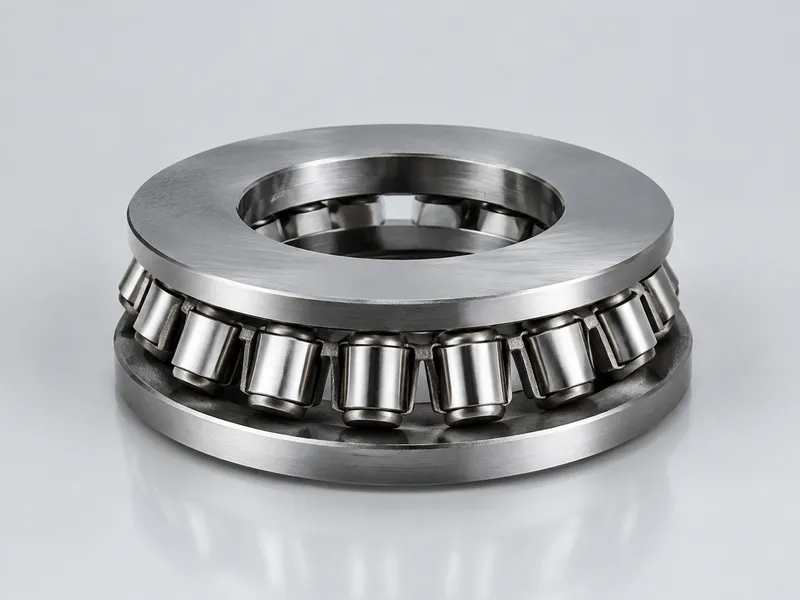
Typical applications
- ✓Exciter shafts on circular and linear motion screens, where the bearing sees continuous vibration, shock from the material stream and rotation of the outer ring under load, so fits and internal clearance must be chosen for the rotating-load case rather than copied from a static application.
- ✓Crusher and feeder shafts adjacent to the screen, where shock loading and shaft deflection favour the same self-aligning roller class.
- ✓Replacement reviews for screens already in service: the existing designation, sleeve and seal arrangement, plus the exciter's installation state (eccentric block balance and angles, foundation levelling, spring seats) are reviewed together before a recommendation is issued.
Application review
- ✓Application review: Load, speed, environment and mounting inputs are reviewed before a recommendation.
- ✓Evidence check: Available product and source evidence is linked to the recommendation.
- ✓Exciter installation review: For replacement inquiries, installation factors that published screen failure analyses link to bearing heating — eccentric block symmetry, foundation and spring seat levelling — are raised with the buyer alongside the bearing specification.
- ✓Lubrication planning input: Relubrication expectations are discussed against the duty temperature, since grease ageing accelerates with temperature and screen-duty roller bearings need more frequent regreasing than ball bearings at equal speed.
Bearing materials
Material and cage selection depends on load, speed, temperature, corrosion and lubrication requirements; confirm the grade against the selected bearing documentation.
Material selection
Send the duty conditions and the current model or drawing so the material and execution can be reviewed against the application.
Precision and clearance
Clearance and precision class must be selected for the shaft, housing, speed and temperature conditions rather than assumed from the bearing type alone.
What to include in an RFQ
For an RFQ, provide the bearing designation, quantity, delivery destination, required documents and the application load and speed conditions.
Quality review
Product identity, dimensions and available evidence are checked before a quotation is issued. Unverified operating limits remain open questions.
Related product types
Related applications
Related capabilities
Review our Deep Groove Ball Bearings for product types and sourcing support.
Common questions
Which bearing should I specify?
Start with the load direction, speed, shaft and housing dimensions, temperature, contamination and mounting arrangement. Send those details with the model or drawing when requesting a quote.
Can you confirm a replacement?
Yes. Include the existing designation, dimensions, seal or clearance code and application conditions. Replacement suitability is confirmed against the available evidence before quotation.
Why do vibrating screen exciter bearings run hot?
Published screen failure analyses point first to correctable installation causes: eccentric blocks with mismatched weight or installation angle on the same axis, uneven foundations or spring seats that let the screen body twist, and a centre of gravity off the design point. Bearing heating is the symptom these causes share, so a replacement review should check them before — or alongside — changing the bearing.
Which bearing type suits a vibrating screen shaft?
Vibratory-rated spherical roller bearings are the standard class for screen and crusher shafts: they carry shock loads and tolerate the shaft deflection and misalignment those applications produce, and are typically mounted on adapter sleeves with dedicated seals. They trade speed capability for load capacity, so the shaft speed should be checked against the bearing's rating rather than assumed.
How often should screen bearings be regreased?
More often than a comparable ball bearing application, because spherical roller bearings at the same speed and temperature consume grease faster. Temperature dominates the interval: grease ages faster as operating temperature rises, so an exciter running hot needs a shorter interval than the nominal chart value. Confirm the actual duty temperature before fixing a schedule.