
Cross reference · 6300 series
6300 Series Deep Groove Ball Bearing Cross Reference
The 6300 series is the medium-width line of the ISO 15 deep groove dimension plan. Each row below is one base designation: the published Open / ZZ / 2RS executions with their boundary dimensions and load rating, and the other-series bearings that share the same bore. Every value is the same model-bound catalog figure as on the linked page — this table adds none. Executions we have not published with evidence are marked for confirmation at quotation, not guessed.
Last updated: 2026-11
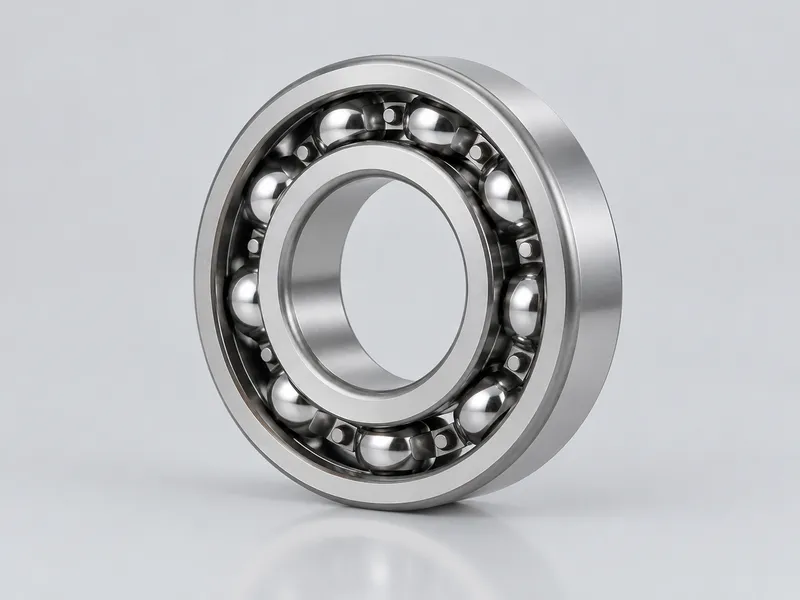
6300 series executions — open, ZZ, 2RS
6304 is the open execution, 6304 ZZ adds two metal shields, 6304 2RS adds two rubber contact seals — all three share the same boundary dimensions, so they fit the same shaft and housing seat. A grey Confirm at quotation cell means we have not published that execution with evidence yet; we supply it on request after confirming the details, we do not quote it from this table.
| Base designation | Bore d (mm) | OD D (mm) | Width B (mm) | Cr (open) | Open | Shielded (ZZ) | Sealed (2RS) | RFQ |
|---|---|---|---|---|---|---|---|---|
| 6300 Koyo / JTEKT | 10 | 35 | 11 | 10.1 kN | 6300 Koyo / JTEKT | Confirm at quotation | Confirm at quotation | Request quote |
| 6301 Koyo / JTEKT | 12 | 37 | 12 | 12.1 kN | 6301 Koyo / JTEKT | Confirm at quotation | Confirm at quotation | Request quote |
| 6302 Koyo / JTEKT | 15 | 42 | 13 | 14.3 kN | 6302 Koyo / JTEKT | Confirm at quotation | Confirm at quotation | Request quote |
| 6303 Koyo / JTEKT | 17 | 47 | 14 | 17 kN | 6303 Koyo / JTEKT | Confirm at quotation | Confirm at quotation | Request quote |
| 6304 Koyo / JTEKT | 20 | 52 | 15 | 19.9 kN | 6304 Koyo / JTEKT | 6304 ZZ Koyo / JTEKT | 6304 2RS Koyo / JTEKT | Request quote |
| 6305 Koyo / JTEKT | 25 | 62 | 17 | 25.7 kN | 6305 Koyo / JTEKT | 6305 ZZ Koyo / JTEKT | Confirm at quotation | Request quote |
| 6306 Koyo / JTEKT | 30 | 72 | 19 | 33.3 kN | 6306 Koyo / JTEKT | Confirm at quotation | Confirm at quotation | Request quote |
| 6307 Koyo / JTEKT | 35 | 80 | 21 | 41.7 kN | 6307 Koyo / JTEKT | Confirm at quotation | Confirm at quotation | Request quote |
| 6308 Koyo / JTEKT | 40 | 90 | 23 | 50.9 kN | 6308 Koyo / JTEKT | Confirm at quotation | Confirm at quotation | Request quote |
| 6309 Koyo / JTEKT | 45 | 100 | 25 | 61.1 kN | 6309 Koyo / JTEKT | Confirm at quotation | Confirm at quotation | Request quote |
| 6310 Koyo / JTEKT | 50 | 110 | 27 | 77.5 kN | 6310 Koyo / JTEKT | Confirm at quotation | Confirm at quotation | Request quote |
| 6311 Koyo / JTEKT | 55 | 120 | 29 | 89.5 kN | 6311 Koyo / JTEKT | Confirm at quotation | Confirm at quotation | Request quote |
| 6312 Koyo / JTEKT | 60 | 130 | 31 | 102 kN | 6312 Koyo / JTEKT | Confirm at quotation | Confirm at quotation | Request quote |
| 6313 Koyo / JTEKT | 65 | 140 | 33 | 116 kN | 6313 Koyo / JTEKT | Confirm at quotation | Confirm at quotation | Request quote |
| 6314 Koyo / JTEKT | 70 | 150 | 35 | 130 kN | 6314 Koyo / JTEKT | Confirm at quotation | Confirm at quotation | Request quote |
| 6315 Koyo / JTEKT | 75 | 160 | 37 | 142 kN | 6315 Koyo / JTEKT | Confirm at quotation | Confirm at quotation | Request quote |
| 6316 Koyo / JTEKT | 80 | 170 | 39 | 154 kN | 6316 Koyo / JTEKT | Confirm at quotation | Confirm at quotation | Request quote |
| 6317 Koyo / JTEKT | 85 | 180 | 41 | 166 kN | 6317 Koyo / JTEKT | Confirm at quotation | Confirm at quotation | Request quote |
| 6318 Koyo / JTEKT | 90 | 190 | 43 | 178 kN | 6318 Koyo / JTEKT | Confirm at quotation | Confirm at quotation | Request quote |
| 6319 Koyo / JTEKT | 95 | 200 | 45 | 191 kN | 6319 Koyo / JTEKT | Confirm at quotation | Confirm at quotation | Request quote |
| 6320 Koyo / JTEKT | 100 | 215 | 47 | 216 kN | 6320 Koyo / JTEKT | Confirm at quotation | Confirm at quotation | Request quote |
| 6321 Koyo / JTEKT | 105 | 225 | 49 | 230 kN | 6321 Koyo / JTEKT | Confirm at quotation | Confirm at quotation | Request quote |
| 6322 Koyo / JTEKT | 110 | 240 | 50 | 257 kN | 6322 Koyo / JTEKT | Confirm at quotation | Confirm at quotation | Request quote |
| 6324 Koyo / JTEKT | 120 | 260 | 55 | 258 kN | 6324 Koyo / JTEKT | Confirm at quotation | Confirm at quotation | Request quote |
| 6326 Koyo / JTEKT | 130 | 280 | 58 | 287 kN | 6326 Koyo / JTEKT | Confirm at quotation | Confirm at quotation | Request quote |
| 6328 Koyo / JTEKT | 140 | 300 | 62 | 316 kN | 6328 Koyo / JTEKT | Confirm at quotation | Confirm at quotation | Request quote |
| 6330 Koyo / JTEKT | 150 | 320 | 65 | 343 kN | 6330 Koyo / JTEKT | Confirm at quotation | Confirm at quotation | Request quote |
Sealed and shielded executions carry lower catalog limiting speeds than the open execution of the same designation — the linked model pages list the speed per execution. Details in 2RS vs ZZ: sealed or shielded bearing.
Same-bore companions across the other series
Within the ISO 15 dimension plan, several series share bores but trade width and outer diameter against load capacity: the extra-light 6000 series, the light 6200 series, the medium 6300 series and the thin-wall 6800 / 6900 series. For each 63xx designation, the companions below are published pages whose bore dimension was checked equal — a thin-wall companion fits the same shaft with a smaller housing envelope and a lower load capacity. Same bore is still only the first check: clearance class, seal design and speed capability can differ between series and brands, so confirm the substitution against your application or send us the original designation.
| 6300-series designation | Bore d (mm) | Published same-bore companions | Companion boundary (d × D × B, mm) |
|---|---|---|---|
| 6300 | 10 | 6000 (Koyo / JTEKT) , 6200 (Koyo / JTEKT) , 6800 (Koyo / JTEKT) , 6900 (Koyo / JTEKT) | 6000 (Koyo / JTEKT): 10 × 26 × 8 · 6200 (Koyo / JTEKT): 10 × 30 × 9 · 6800 (Koyo / JTEKT): 10 × 19 × 5 · 6900 (Koyo / JTEKT): 10 × 22 × 6 |
| 6301 | 12 | 6001 (Koyo / JTEKT) , 6201 (Koyo / JTEKT) , 6801 (Koyo / JTEKT) , 6901 (Koyo / JTEKT) | 6001 (Koyo / JTEKT): 12 × 28 × 8 · 6201 (Koyo / JTEKT): 12 × 32 × 10 · 6801 (Koyo / JTEKT): 12 × 21 × 5 · 6901 (Koyo / JTEKT): 12 × 24 × 6 |
| 6302 | 15 | 6002 (Koyo / JTEKT) , 6202 (Koyo / JTEKT) , 6802 (Koyo / JTEKT) , 6902 (Koyo / JTEKT) | 6002 (Koyo / JTEKT): 15 × 32 × 9 · 6202 (Koyo / JTEKT): 15 × 35 × 11 · 6802 (Koyo / JTEKT): 15 × 24 × 5 · 6902 (Koyo / JTEKT): 15 × 28 × 7 |
| 6303 | 17 | 6003 (Koyo / JTEKT) , 6203 (Koyo / JTEKT) , 6803 (Koyo / JTEKT) , 6903 (Koyo / JTEKT) | 6003 (Koyo / JTEKT): 17 × 35 × 10 · 6203 (Koyo / JTEKT): 17 × 40 × 12 · 6803 (Koyo / JTEKT): 17 × 26 × 5 · 6903 (Koyo / JTEKT): 17 × 30 × 7 |
| 6304 | 20 | 6004 (Koyo / JTEKT) , 6204 (Koyo / JTEKT) , 6804 (Koyo / JTEKT) , 6904 (Koyo / JTEKT) | 6004 (Koyo / JTEKT): 20 × 42 × 12 · 6204 (Koyo / JTEKT): 20 × 47 × 14 · 6804 (Koyo / JTEKT): 20 × 32 × 7 · 6904 (Koyo / JTEKT): 20 × 37 × 9 |
| 6305 | 25 | 6005 (Koyo / JTEKT) , 6205 (Koyo / JTEKT) , 6805 (Koyo / JTEKT) , 6905 (Koyo / JTEKT) | 6005 (Koyo / JTEKT): 25 × 47 × 12 · 6205 (Koyo / JTEKT): 25 × 52 × 15 · 6805 (Koyo / JTEKT): 25 × 37 × 7 · 6905 (Koyo / JTEKT): 25 × 42 × 9 |
| 6306 | 30 | 6006 (Koyo / JTEKT) , 6206 (Koyo / JTEKT) , 6806 (Koyo / JTEKT) , 6906 (Koyo / JTEKT) | 6006 (Koyo / JTEKT): 30 × 55 × 13 · 6206 (Koyo / JTEKT): 30 × 62 × 16 · 6806 (Koyo / JTEKT): 30 × 42 × 7 · 6906 (Koyo / JTEKT): 30 × 47 × 9 |
| 6307 | 35 | 6007 (Koyo / JTEKT) , 6207 (Koyo / JTEKT) , 6807 (Koyo / JTEKT) , 6907 (Koyo / JTEKT) | 6007 (Koyo / JTEKT): 35 × 62 × 14 · 6207 (Koyo / JTEKT): 35 × 72 × 17 · 6807 (Koyo / JTEKT): 35 × 47 × 7 · 6907 (Koyo / JTEKT): 35 × 55 × 10 |
| 6308 | 40 | 6008 (Koyo / JTEKT) , 6208 (Koyo / JTEKT) , 6808 (Koyo / JTEKT) , 6908 (Koyo / JTEKT) | 6008 (Koyo / JTEKT): 40 × 68 × 15 · 6208 (Koyo / JTEKT): 40 × 80 × 18 · 6808 (Koyo / JTEKT): 40 × 52 × 7 · 6908 (Koyo / JTEKT): 40 × 62 × 12 |
| 6309 | 45 | 6009 (Koyo / JTEKT) , 6209 (Koyo / JTEKT) , 6809 (Koyo / JTEKT) , 6909 (Koyo / JTEKT) | 6009 (Koyo / JTEKT): 45 × 75 × 16 · 6209 (Koyo / JTEKT): 45 × 85 × 19 · 6809 (Koyo / JTEKT): 45 × 58 × 7 · 6909 (Koyo / JTEKT): 45 × 68 × 12 |
| 6310 | 50 | 6010 (Koyo / JTEKT) , 6210 (Koyo / JTEKT) , 6810 (Koyo / JTEKT) , 6910 (Koyo / JTEKT) | 6010 (Koyo / JTEKT): 50 × 80 × 16 · 6210 (Koyo / JTEKT): 50 × 90 × 20 · 6810 (Koyo / JTEKT): 50 × 65 × 7 · 6910 (Koyo / JTEKT): 50 × 72 × 12 |
| 6311 | 55 | 6011 (Koyo / JTEKT) , 6211 (Koyo / JTEKT) , 6811 (Koyo / JTEKT) , 6911 (Koyo / JTEKT) | 6011 (Koyo / JTEKT): 55 × 90 × 18 · 6211 (Koyo / JTEKT): 55 × 100 × 21 · 6811 (Koyo / JTEKT): 55 × 72 × 9 · 6911 (Koyo / JTEKT): 55 × 80 × 13 |
| 6312 | 60 | 6012 (Koyo / JTEKT) , 6212 (Koyo / JTEKT) , 6812 (Koyo / JTEKT) , 6912 (Koyo / JTEKT) | 6012 (Koyo / JTEKT): 60 × 95 × 18 · 6212 (Koyo / JTEKT): 60 × 110 × 22 · 6812 (Koyo / JTEKT): 60 × 78 × 10 · 6912 (Koyo / JTEKT): 60 × 85 × 13 |
| 6313 | 65 | 6013 (Koyo / JTEKT) , 6213 (Koyo / JTEKT) , 6813 (Koyo / JTEKT) , 6913 (Koyo / JTEKT) | 6013 (Koyo / JTEKT): 65 × 100 × 18 · 6213 (Koyo / JTEKT): 65 × 120 × 23 · 6813 (Koyo / JTEKT): 65 × 85 × 10 · 6913 (Koyo / JTEKT): 65 × 90 × 13 |
| 6314 | 70 | 6014 (Koyo / JTEKT) , 6214 (Koyo / JTEKT) , 6814 (Koyo / JTEKT) , 6914 (Koyo / JTEKT) | 6014 (Koyo / JTEKT): 70 × 110 × 20 · 6214 (Koyo / JTEKT): 70 × 125 × 24 · 6814 (Koyo / JTEKT): 70 × 90 × 10 · 6914 (Koyo / JTEKT): 70 × 100 × 16 |
| 6315 | 75 | 6015 (Koyo / JTEKT) , 6215 (Koyo / JTEKT) , 6815 (Koyo / JTEKT) , 6915 (Koyo / JTEKT) | 6015 (Koyo / JTEKT): 75 × 115 × 20 · 6215 (Koyo / JTEKT): 75 × 130 × 25 · 6815 (Koyo / JTEKT): 75 × 95 × 10 · 6915 (Koyo / JTEKT): 75 × 105 × 16 |
| 6316 | 80 | 6016 (Koyo / JTEKT) , 6216 (Koyo / JTEKT) , 6816 (Koyo / JTEKT) , 6916 (Koyo / JTEKT) | 6016 (Koyo / JTEKT): 80 × 125 × 22 · 6216 (Koyo / JTEKT): 80 × 140 × 26 · 6816 (Koyo / JTEKT): 80 × 100 × 10 · 6916 (Koyo / JTEKT): 80 × 110 × 16 |
| 6317 | 85 | 6017 (Koyo / JTEKT) , 6217 (Koyo / JTEKT) , 6817 (Koyo / JTEKT) , 6917 (Koyo / JTEKT) | 6017 (Koyo / JTEKT): 85 × 130 × 22 · 6217 (Koyo / JTEKT): 85 × 150 × 28 · 6817 (Koyo / JTEKT): 85 × 110 × 13 · 6917 (Koyo / JTEKT): 85 × 120 × 18 |
| 6318 | 90 | 6018 (Koyo / JTEKT) , 6218 (Koyo / JTEKT) , 6818 (Koyo / JTEKT) , 6918 (Koyo / JTEKT) | 6018 (Koyo / JTEKT): 90 × 140 × 24 · 6218 (Koyo / JTEKT): 90 × 160 × 30 · 6818 (Koyo / JTEKT): 90 × 115 × 13 · 6918 (Koyo / JTEKT): 90 × 125 × 18 |
| 6319 | 95 | 6019 (Koyo / JTEKT) , 6219 (Koyo / JTEKT) , 6919 (Koyo / JTEKT) | 6019 (Koyo / JTEKT): 95 × 145 × 24 · 6219 (Koyo / JTEKT): 95 × 170 × 32 · 6919 (Koyo / JTEKT): 95 × 130 × 18 |
| 6320 | 100 | 6020 (Koyo / JTEKT) , 6220 (Koyo / JTEKT) , 6820 (Koyo / JTEKT) , 6920 (Koyo / JTEKT) | 6020 (Koyo / JTEKT): 100 × 150 × 24 · 6220 (Koyo / JTEKT): 100 × 180 × 34 · 6820 (Koyo / JTEKT): 100 × 125 × 13 · 6920 (Koyo / JTEKT): 100 × 140 × 20 |
| 6321 | 105 | 6021 (Koyo / JTEKT) , 6221 (Koyo / JTEKT) | 6021 (Koyo / JTEKT): 105 × 160 × 26 · 6221 (Koyo / JTEKT): 105 × 190 × 36 |
| 6322 | 110 | 6022 (Koyo / JTEKT) , 6222 (Koyo / JTEKT) | 6022 (Koyo / JTEKT): 110 × 170 × 28 · 6222 (Koyo / JTEKT): 110 × 200 × 38 |
| 6324 | 120 | 6024 (Koyo / JTEKT) , 6224 (Koyo / JTEKT) | 6024 (Koyo / JTEKT): 120 × 180 × 28 · 6224 (Koyo / JTEKT): 120 × 215 × 40 |
| 6326 | 130 | 6026 (Koyo / JTEKT) , 6226 (Koyo / JTEKT) | 6026 (Koyo / JTEKT): 130 × 200 × 33 · 6226 (Koyo / JTEKT): 130 × 230 × 40 |
| 6328 | 140 | 6028 (Koyo / JTEKT) , 6228 (Koyo / JTEKT) | 6028 (Koyo / JTEKT): 140 × 210 × 33 · 6228 (Koyo / JTEKT): 140 × 250 × 42 |
| 6330 | 150 | 6030 (Koyo / JTEKT) , 6230 (Koyo / JTEKT) | 6030 (Koyo / JTEKT): 150 × 225 × 35 · 6230 (Koyo / JTEKT): 150 × 270 × 45 |
Where the 6300 series fits
The 6000, 6200 and 6300 designations belong to the metric single-row deep groove ball bearing dimension plan codified by ISO 15 (implemented in the German standard DIN 625). That is why a 6304 from any conforming manufacturer occupies the same 20 × 52 × 15 mm boundary envelope: the dimension plan is standardized, and our published model pages confirm their dimensions against it. What the plan does not standardize away: internal clearance class, seal and shield design, cage material and noise characteristics can all differ between brands and executions — so treat any equivalent as a candidate, not a confirmed swap. The checking sequence is described in how to find a replacement for an existing bearing model.
This page covers the 6300 (medium) series only. The 6000 and 6200 series rows, and the open / ZZ / 2RS execution notes that apply to them, live on the main deep groove ball bearing cross reference hub, with the 60xx series detailed on its own 6000 series cross reference page and the 62xx series on its own 6200 series cross reference page.
Note on the narrow 61xx designations (618xx/619xx in other makers' catalogs): our collected manufacturer catalog does not list them, so we publish no dimension table for them and make no equivalence claim — send us the designation instead and we confirm availability at quotation.
Failure modes in service — 6300 series
The 6300 series is the medium answer of the deep groove plan, and its substitutions tend to happen under real load: heavy fans, gear stages, agitators and conveyors where the previous bearing left evidence behind. On a 63xx the documented early-death modes carry more energy than on the light series — creep becomes destructive faster, thermal preload arrives sooner, and the cage sits closer to its inertial limits. These are the failure modes a cross-reference replacement should be checked against before it is fitted, not after.
Creep and the seat the old bearing left
A medium-section 63xx is usually the loaded ring of its arrangement, so a loose fit puts it to work on its seat. The symptom progression is documented in order: "polished or discolored seat surfaces, reddish-brown fretting corrosion debris, measurable seat wear, rising vibration, and finally a spinning ring that destroys both the seat and the bearing. By the time it's audible, the shaft is usually damaged too" (bearing fits and tolerances documentation). Heavy duty compresses that timeline — the same wear that takes a year on a light series can gut a 63xx seat in a season.
The cross-reference consequence is specific: before fitting the replacement, inspect and measure the seat. "When interference is insufficient — because the seat was machined undersize, has worn, or was damaged during previous bearing removals — the rotating ring creeps… The fix is restoring the seat dimension, not just replacing the bearing" (bearing fits and tolerances documentation). A 6305 fitted onto a crept seat is a replacement that has already failed; only its calendar has not caught up.
Thermal preload after the swap
The medium section carries more steel, and steel carries temperature: a 63xx pair set correctly cold can preload itself once the housing and shaft grow at different rates. The rapid-transition variant is documented on spindles and works identically on heavy-duty 63xx positions: "rapid temperature changes — fast warm-up at the start of a shift, fast cool-down after shutdown… components may not expand uniformly, which can momentarily increase preload beyond design intent" (premature spindle failure analysis). Excessive preload then pays itself in heat, and the loop closes.
The substitution rule: re-derive the clearance class after the fits and the operating temperature are known, and verify the machine hot — a machine that passes a cold alignment and clearance check can still load the bearing wrong at operating temperature (motor bearing field guide). The abutment dimensions on the linked designation pages are the inputs to that check; the clearance class itself is confirmed at quotation.
Overload: the cubic law and the crash dent
Medium-series margins invite duty creep, and the load-life relationship punishes it nonlinearly: "because the load-life relationship is cubic for ball bearings (and close to it for roller bearings), even a 20–25% increase in actual load above design load can cut calculated life by close to half" (premature spindle failure analysis). A 63xx swapped into a process that has grown since the last installation inherits exactly this arithmetic — 10–20% more throughput quietly halves the bearing's life.
The abrupt variant leaves a signature: shock loads "can produce instantaneous Hertzian contact stresses that cause brinelling (visible indentations) on the raceway, which then act as fatigue" initiators (premature spindle failure analysis); a static overload "can leave permanent indentations (brinelling), or microscopic plastic deformation that raises noise and vibration" (static vs dynamic load guide). If the machine has crashed or jammed since the old bearing was fitted, inspect before reusing anything else in the assembly.
Edge loading and the alignment that moved
A heavily loaded 63xx forgives less tilt than a lightly loaded 62xx: calculated capacity "is based on the assumption that the misalignment will not exceed 0.0005 radians (0.03°). Misalignment greater than this will lead to L10 lives less than that calculated" (bearing capacity documentation). The documented signs — asymmetric wear patterns, elevated running temperature, a 1× and 2× vibration signature — belong in the changeover checklist, because housing bolt torque and coupling alignment are the two things most likely to have changed while the old bearing was dying.
And verify hot where the duty is hot: "check alignment at operating temperature when the application warrants it: high-speed machines and hot process equipment often move enough to matter" (motor bearing field guide). A cross-reference replacement is the cheapest moment to re-establish the alignment baseline; the next bearing change is the most expensive.
Cage at speed after the step up
Stepping a position up to the 6300 series for capacity raises its rotating mass, and the cage pays for the trade at speed: "in equipment that rapidly changes RPM, both up and down, the bearing's cage is subjected to high inertial loads. This can result in a fatigue failure of the cage and a functional end to the bearing's life, even though no fatigue spall has developed" (bearing speed-limit documentation). A 63xx carrying a heavier rotor through start-stop cycles sits closer to this regime than the 62xx it replaced.
Temperature bounds the cage question too: "steel cages run to 300 °C and brass to 250 °C, but a polyamide cage has no single rating: its limit depends on the lubricant" (static vs dynamic load guide). The limiting speeds published on the linked 63xx pages are the ceiling that keeps the cage out of the inertial regime; cage material and precision class are confirmed per quotation, not assumed from this table.
The damage atlas behind this section is in our failure-modes overview; the same-bore series trade against the light series is on the 6205 vs 6305 comparison. Each designation above links to its model-bound specification page.